
by Dorothy Maraglino, Prison Journalism Project
February 11, 2026
In 2021, writer Dorothy Maraglino’s friend Lynette Demello felt a pain in her breast so sharp that she rocked back and forth. When she asked guards to call medical staff, they told her health emergencies were for people who couldn’t breathe. Demello was later diagnosed with breast cancer.
Ralph Marcus, who died in California last year from spindle cell carcinoma, told a PJP editor that an outside doctor instructed him to come back for a necessary surgery. “But I never got to go back,” Marcus said. “I couldn’t follow up.”
Anthony Triplett, one of over 50 contributors who shared stories with Prison Journalism Project about cancer in prison, knows multiple incarcerated people with the disease.
“All of them found out when it was Stage 4,” he told PJP. “What happened to Stages 1 through 3?”
Every year in the United States, hundreds of thousands of people — populations the size of Baltimore or Milwaukee — die from cancer. It’s the second leading cause of death in American society at large. In prison, it’s the first.
Today, seven out of 10 people diagnosed with cancer end up surviving at least five years. But survival is largely a privilege of the free. If you’re locked up, you’re more likely to die in the years following a diagnosis, according to a review of 20 studies from 1990 to 2021 that investigated cancer rates among incarcerated and formerly incarcerated people.
“It’s absolutely clear — if you are diagnosed with cancer in prison, survival is much worse,” said Dr. Christopher Manz, one of the nation’s leading researchers on cancer in prison and an assistant professor in medical oncology at Dana-Farber Cancer Institute and Harvard Medical School.
We do not know whether prison makes cancer itself deadlier. Just like on the outside, outcomes are impacted by factors including the type of cancer, genetics and underlying health conditions.
What we do know is that the prison environment — the persistent and chronic stress, the unhealthy food, and the poor quality of medical care — makes outcomes for cancer patients worse.
PJP contributors stressed again and again that delays in diagnosis, inadequate treatment, and inconsistent coordination between prison and outside health care systems are partly to blame.
Over the past year, PJP set out to understand why cancer is the leading killer in prisons, and why outcomes for patients who have been to prison are worse than those who have not. In over 50 dispatches collected by PJP editors — a portion of which have been edited and published below — incarcerated contributors from across the country described a cruel and chaotic reality.
Nearly half of the contributors claimed they received, or knew people who received, late diagnoses after months and even years of pain and discomfort. In some cases, their symptoms were dismissed and belittled, often treated with nothing more than over-the-counter pain killers, until the severity of the problem became too intense to ignore.
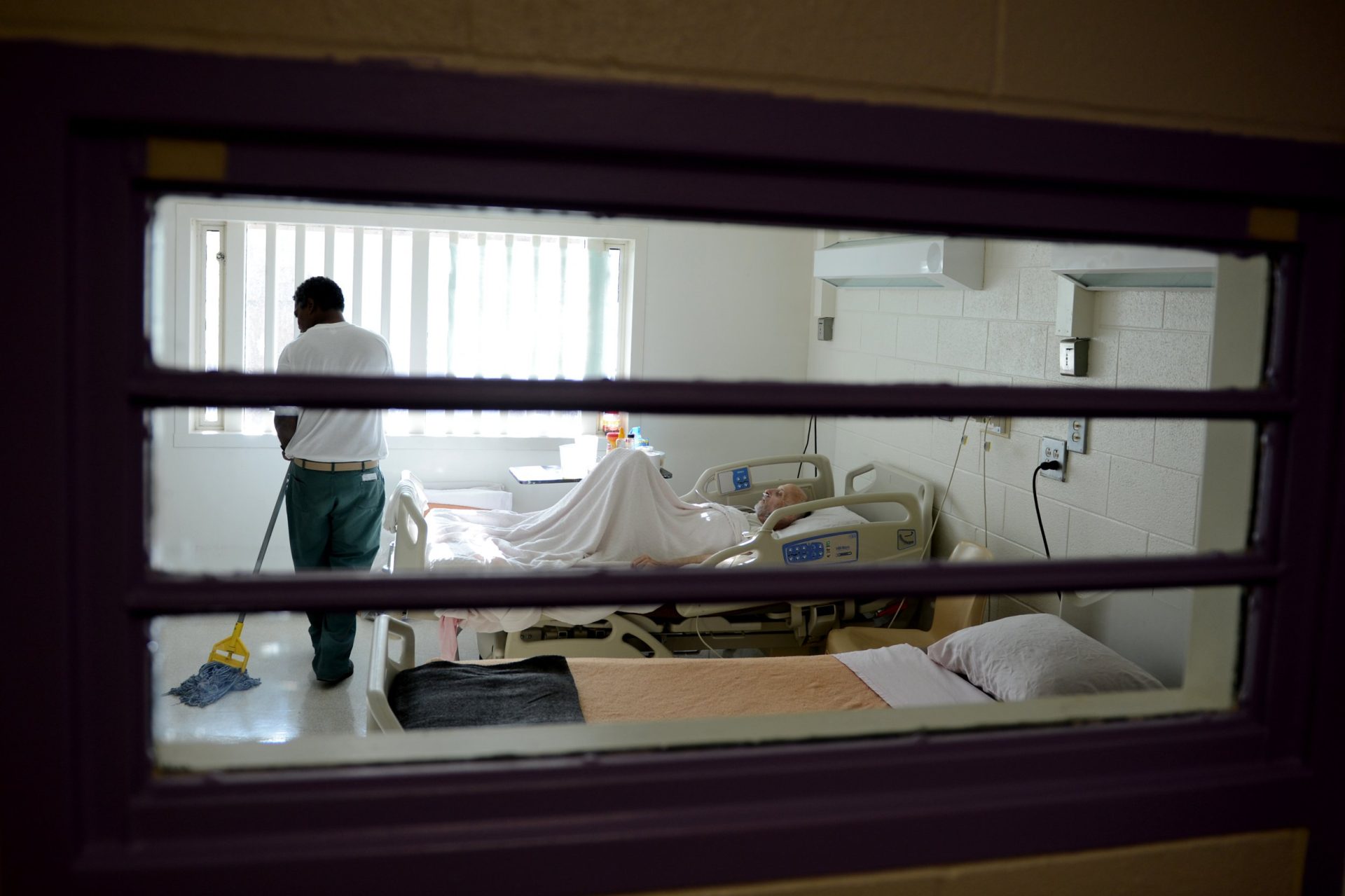
For many, a diagnosis marked the beginning of a long nightmare for the patient and their family. Over a dozen writers described appointments that were missed or delayed because of a failure by under-resourced prison staff to arrange transportation. When appointments did happen, patients needing off-site treatment were forced to strip down and cuff up, then remain chained to a hospital bed while meeting with a doctor or receiving treatment.
Returning to prison post-care often triggered periods of emotional uncertainty — about the next appointment, the results of a consequential scan, one’s long term prognosis. In fact, when it comes to outside appointments, incarcerated patients are generally not permitted to know when — or if — they have even been scheduled.
And the physical agony can be unbearable. No one feels good following cancer treatments like chemotherapy, but recovering in prison is a unique kind of hell, PJP contributors said.
A 2022 study out of Connecticut found that cancer patients in prison were 92% more likely than free patients to die within five years of diagnosis. For patients diagnosed with cancer in the year after release, the risk of death was 118% higher than those never incarcerated. A 2023 review of cancer data in Massachusetts found that currently and formerly incarcerated people were more likely to be diagnosed with late-stage cancer than patients who never went to prison or jail.
Because of longer prison sentences and decreasing rates of parole, people 55 and older constitute an ever-larger portion of the U.S. prison population. Meanwhile, researchers told PJP that the overall health of the incarcerated population prior to prison, among other factors, also helps explain why cancer outcomes are worse for people with histories of incarceration.
Contributors to PJP’s special series on cancer have intimate connections to the disease. Some are themselves suffering from cancer. Others have friends who died or are dying from cancer, or are currently in remission. At least two contributors passed away — one from cancer, one from other complications after first surviving cancer — while we were working on this project.
The stories collected below are excerpts of much longer and more complex narratives, many of which are difficult and in some cases impossible to verify. Five of the below dispatches link out to longer essays, remembrances or interviews. Where we were able, PJP editors relied on various forms of evidence to confirm facts, including medical records and interviews with friends and family members who could corroborate accounts. Most of the stories detail experiences that the writers themselves encountered or witnessed firsthand.
Lynette Demello
Age: 41 | State: California
Type of cancer: Breast
By Dorothy Maraglino
Late in 2021, Lynette tested positive for COVID-19. She was quarantined in the gym, but the pain in her breast was fierce. She rocked back and forth. When Lynette asked corrections staff to call medical, they dismissed her, telling her medical emergencies were for “people who can’t breathe.” At night, Lynette was scared to sleep. The pain continued, and her health deteriorated.
When she was released back to her room, her roommates were shocked at the sight of her. Patricia, a friend who had known her the longest, was worried.
At night, Patricia placed her bed mat on the floor beside Lynette to hold her hand or stroke her hair. She assured her it was OK for her to sleep. Patricia made food in hopes that Lynette might eat and regain strength. She did all of her friend’s chores and laundry, as Lynette could only manage a few small tasks at a time.
When it was time for her biopsy, Lynette was strip-searched, shackled and placed in a van for the long ride to the medical facility. By then, the original lump had grown to the size of a golf ball and additional lumps had emerged. The biopsy required seven spots to be cut on her breast and armpit. The ride back was excruciatingly painful as the shackles pulled her arms and tugged at the incisions.
Back in the facility, only Patricia cared for her. Medical staff did not check on the biopsy sites for a week, Lynette said. No one asked about her pain levels. All she could do was wait for the results, which eventually came back positive.
Marcus Henderson
Age: Deceased | State: California
Type of cancer: Colon
By Jonathan Chiu
Soon my friend Marcus’ cancer returned with a vengeance. Upon his release, his medical paperwork was lost, and it had taken months communicating with different counties to transfer his paperwork from the Bay Area back to Los Angeles and reestablish care.
Once his coverage was finally worked out, the doctors had to restart his care and he had to request new referrals for specialists. During this time, he took several trips to the ER following extreme bouts of pain.
His appetite left him. His weight dropped. By the time his treatment finally began, it was already the beginning of the end.
On May 13, 2025, Marcus went back to the hospital. I went to see him in the afternoon and sat beside him. He was in so much pain. I remember the nurse coming in to change his IVs. She and I moved him into a more comfortable position.
As the evening arrived, Marcus drifted off without a sound. At first, I thought the pain meds finally kicked in. Then the alarm went off. A half dozen hospital staff surrounded him. I sat there watching as the nurses tried to resuscitate Marcus, placing all their strength on his chest.
I held back tears, denying what I was seeing. I wanted to tell the nurses to stop hurting him. He was at peace and finally without pain. But I also wanted him to come back to me. He was my best friend. My brother.
I placed my hand on Marcus’ chest and muttered, “I’m sorry. I’m sorry we couldn’t get the treatments faster. I’m sorry we didn’t go to Universal Studios. I’m sorry we couldn’t go out more because of your f—ing ankle monitor. I’m sorry you were in so much pain.” Read more.
Raymond Gregg
Age: 75 | State: Florida
Type of cancer: Eccrine gland carcinoma
By Eugene Landers
Last year, Raymond Gregg stepped up to the lectern in Union Correctional Institution’s chapel to open our monthly Vietnam Veterans of America meeting with a prayer, as he had done every month for the last five years. The white-bearded man, who looked much older than his 75 years, had a bandage covering his right ear, which often oozed fluid.
Gregg is a former Marine with a history of post-traumatic stress disorder, which he blames in part for the murder that landed him in prison in 1998. We’ve been incarcerated together for over a decade, and a lot has changed for Gregg in that time.
Gregg often feels dizzy and gets blindingly painful migraines. He doesn’t like looking in the mirror anymore. His once handsome face has gone haggard. His hair, once brown with a touch of gray around the temples, is white and thin. His cheeks are drawn and there is no sparkle left in his eyes. Though he has trouble getting around, Gregg refuses to use a cane. Instead, he walks slightly bent, tottering back and forth. He describes it as “a controlled stagger.” At nearly all times, he is escorted by two or three fellow vets in case he loses his balance.
My friend had the misfortune to develop one of the worst kinds of cancer you can get in prison.
Doctors told Gregg that he suffers from eccrine carcinoma, a rare form of skin cancer that attacks sweat glands. In 2024, after more than a decade of what he described as misdiagnoses, insufficient symptom management and overwhelming discomfort, a doctor told Gregg his cancer had spread to his brain. Read more.
Phyllis Stacks
Age: Deceased | State: Oklahoma
Type of cancer: Lung
By Kelsey Dodson
In January 2019, a woman I considered a grandmother was diagnosed with lung cancer. She had battled chronic obstructive pulmonary disease and emphysema for years and was on a constant supply of oxygen. She had to roll a bulky portable oxygen machine everywhere she went.
Throughout 2019, she was scheduled and rescheduled for appointments, sometimes months apart.
I remember her telling me she was unable to get correct information to make a decision about treatment. Eventually medical staff told her she had stomach cancer that had spread to her lungs. She died in December that year.
Ray
Age: Deceased | State: Texas
Type of cancer: Unknown
By Brian Fuller
In 2017, when Ray’s throat started hurting, he just thought he needed to quit smoking. Although that was definitely true, the knot that soon developed in the side of his neck caused concern. He sought help from medical, and weeks turned into months then stretched to more than a year.
The facility’s medical department kept sending Ray back, telling him there was nothing wrong with him, Ray said. It finally took a multi-level approach using outside and inside pressure to get Ray sent to outside specialists.
Once there, the doctors asked him why he hadn’t come forward sooner.
Ray finally left for treatment near the end of 2018. We received word in early 2019 that Ray had died.
Bethany Lott
Age: 45 | State: Oklahoma
Type of cancer: Breast
As told to Jax and Carla Canning
I knew it was bad because the lump was so big. Even though the nurse had dismissed me, I didn’t quit writing paperwork. I was flipping out, writing medical requests nonstop — because I was not dying in prison.
I wrote requests directly to the actual doctor there at the prison, to try to get help from her instead of just seeing this nurse practitioner.
In February, I was supposed to go to the Breast Health Network in Oklahoma City, but the van got a flat tire, so we missed my appointment. They took me right back to the facility.
The following month, I went back to prison medical to figure out why I hadn’t been taken back out yet. They told me that I needed a new referral. No one ever communicated that to me, so I didn’t know.
In April, I finally got a mammogram, an ultrasound and a biopsy at the Breast Health Network.
My mom is a nurse. She told me to ask if the lump was round and smooth or if it had spikes on it. During the biopsy, I leaned over and asked.
The woman said, “It has spikes on it.”
Michael Broadway
Age: Deceased | State: Illinois
Type of cancer: Prostate
By Michael Broadway
After nearly four hours in surgery, I burrowed my way back to consciousness, only to find one of my arms and a leg shackled to the hospital bed.
Two corrections officers stood watch over me. Those restraints wore more heavily on my mind than they did my body; they were reminders that my body remained in a carceral state and needed to be secured despite being incapacitated after undergoing delicate surgery.
Feeling dehumanized in that moment was the least of my concerns. Were the doctors able to successfully remove my prostate? Did the cancer metastasize? Those were my chief fears.
Unfortunately, before I was able to fully regain consciousness and get answers from the doctors who performed the surgery, a nurse informed the officers that I was being released.
With my mind still in a fog, I was dressed back into my prison blues, shackled and handcuffed. I was helped into a wheelchair and led out of the room into darkness. Read more.
Richard Hassain Estes
Age: Deceased | State: Pennsylvania
Type of cancer: Colon
By Shawn Harris
In 2022, Richard Hassain Estes was leaving the prison twice a week for radiation and chemotherapy. When he returned, he was often on the verge of tears. More than once he told me how painful it was to be transferred to and from the hospital, feeling sick and wearing only a thin prison jumpsuit. Sometimes it took a while before he could calm down enough to go back to his cell.
When we first met, Hassain’s colon cancer was in remission. We met in the intake block, where I was working as a certified peer specialist and he was a new arrival. When I first saw Hassain, I thought he looked familiar. He reminded me of guys I had grown up with and known my entire life.
I knew Hassain for less than a year when I noticed something was off about him. He seemed extremely upset. He asked me to type a letter for him. In the letter he revealed that an oncologist told him his cancer had returned, and was spreading through his bones. One tumor was protruding inward toward his spine. The doctor gave him about six months to live.
The letter highlighted all of the treatments and procedures he had been through. It was an appeal for help. He was going to make copies of it and send it out to organizations that could help him get a second opinion. When I realized that this young man of 44 had been given a death sentence, I was overcome with grief. I felt an obligation to support him at this stage of his journey. Read more.
Leonard Bishop
Age: 50 | State: Federal
Type of cancer: Stomach
As told to Nijinsky Dix
When I learned I had cancer I was in shock, but I wasn’t afraid. It’s like I knew I wasn’t going to die. But of course, I replayed all of those sick call visits, threats, the advice to get tested for something I knew nothing about, everything. I knew something was wrong with me and they didn’t believe me.
I was drugged up for the most part due to the pain, but doctors made sure I was coherent when they discussed the treatment plan, timeframe, counseling and side effects. Even though I was chained to the bed due to my custody level, the doctors treated me like a person, like I was a real patient, not an inmate.
My treatment plan consisted of eight rounds of chemo. After each round, I had to let my immune system restore itself before we started the next round. I was weak. It was a lot physically and mentally. I had a few complications with infections and bleeding, but the standard of care was humane.
Since I’ve been in remission for over 10 years, they don’t really test me unless I feel sick. Even though they know my medical history, I only receive a routine, basic checkup as required by policy, and it’s not for cancer. So, if Lord forbid anything happens, I feel like it would probably be like my first time at sick call all over again.
Richard Neff
Age: Deceased | State: Michigan
Type of cancer: Stomach
By Leo Carmona
My now-deceased friend Richard Neff was diagnosed with cancer in 2018. However, he wasn’t told about the diagnosis until nearly a year and a half later.
During that gap, Mr. Neff had been told that nothing was wrong with him, and that he should purchase the generic Pepto-Bismol or Mylanta-type products from the commissary. He suffered from daily vomiting, diarrhea and very noticeable weight loss during this period.
Mr. Neff underwent an MRI, and was subsequently told by prison medical staff that nothing was wrong with him.
But about a year and a half later, he saw a medical provider on a tele-med connection. She noticed the diagnosis, but didn’t see any active medication orders, or any pending offsite oncology appointments. This led her to assume that Mr. Neff had been refusing treatment.
In reality, he didn’t even know about the diagnosis. He was immediately sent for an updated scan, which confirmed that the cancer had spread from his stomach to his bones and brain.
Ralph Marcus
Age: Deceased | State: California
Type of cancer: Spindle cell sarcoma
As told to Carla Canning
Throughout this ordeal, I’ve been off-site 178 times.
Sometimes I’d be scheduled to go out to the hospital, but then I’d never actually get to go. There would be no explanation, no nothing.
One time I got to the hospital but the doctor wasn’t there, so only the assistants saw me. When I got back to the prison, all they saw was that I went to the hospital. It looked like a successful visit, but I never even saw the doctor.
Fortunately it wasn’t always like this. My doc from University of California at San Francisco was a very good doctor. He tried to save my life by amputating my leg. I saw him probably six to seven times. He came and visited me after he amputated and he talked to me in the hospital room.
When I first went to the hospital, the doctor who examined me said, “I’m going to need you to come back for surgery.” But I never got to go back. I couldn’t follow up with anyone. I’d see a prison doctor and tell them. One even asked, “Well, why didn’t you go back?” And I said, “I don’t know, I’m not supposed to be the one to arrange that.” Then they would send me back to the hospital and it would start it all over again. It was crazy, man. It would drive a person nuts. Read more.
Virna Darby
Age: Deceased | State: New Jersey
Type of cancer: Stomach
By Lucretia Stone
Depending on what type of day Virna Darby was having, we would either listen to music or look at family photos on my tablet. If she did not have a good day, I spent the night playing games on my tablet.
Ms. Darby, as I knew her, was suffering from stomach cancer and at the end of her life. She told me medical staff did not stockpile the morphine for her. Instead, they ordered it from the pharmacy in small quantities. When they ran out she would have to wait, in pain. Sometimes she waited days. There were times when frustration boiled over and she would curse the staff out.
The last night I spent with her, I arrived at the prison hospital and noticed they had placed her mattress on the floor to keep her from falling off of the bed. I remember one of the nurses saying in a hushed tone, “It won’t be much longer.”
Hearing that made me sad, but I mustered all the joy I could. I went inside the room and said her name. She smiled a little. I sat on the floor beside her and played some old-school gospel music. In response, she raised her hand whenever she could. I watched and sang as tears ran from the corners of her eyes.
Antoine Shaw
Age: 52 | State: Illinois
Type of cancer: Follicular lymphoma
As told to Ryan Green
One day, my whole body swelled. I felt like I was burning. They took me to an outside hospital, where they treated me. When things calmed, staff told me I had a blood cancer called follicular lymphoma, which makes it where my body doesn’t create enough white blood cells to fight disease.
They said it had spread to my lymph nodes. They started the process to send me to the Butner Federal Medical Center; it took three months for bed space to become available. Cancer patients lived on the fourth floor. I was in chemo once a week. There were about 20 other people getting treatment. We sat in these reclining chairs, like a La-Z-Boy, and got to watch TV.
My treatment was different because I had a severe allergic reaction to the chemo. I’m allergic to shellfish, which contains a type of iodine that’s also used in chemotherapy. So I had to take a lot of Benadryl 10 minutes before treatment.
Now, I have to take more vitamins because my immune system is compromised, but I have to pay for them myself. It’s hard to eat well. I have to live so far away from my family because this is the only prison that can treat me.
Homer D.
Age: 65 | State: Missouri
Type of cancer: Bladder
As told to Mason Bryan
I received my diagnosis at the beginning of summer 2025.
When I was doing radiation every day — five days a week for 22 days — there were five other people going with me, doing the very same thing. There are many cancer patients where I’m incarcerated. They bring them here from other camps. There’s a sense of, “We’re kind of in this terrible situation together.” I’m probably the oldest one. I’ll be 65 in about eight days, but they’re all in their 60s too. I think every one of them has pancreatic cancer.
The transport guards treat you with dignity and respect. You get shackled in cuffs and everything. Then they take us all out to the cancer center. Once we get there, they take the cuffs off of you, but they leave the shackles around your legs on while you’re getting chemo. There’s a guard that sits in there with you.
Fifteen people who I knew personally have died since I’ve been incarcerated. Within eight years, they were all gone. It is a shocking number.
I wonder about the meat that they feed us. It’s mystery meat. Some of us think the water may have had a lot to do with it. The guards don’t drink the water here. They bring their own water.
I don’t understand why there’s so much cancer. It just blows my mind. Maybe it’s because of the medical care and the cost. The cost of treating cancer is astronomical. So you have these medical providers that are trying to do everything they can to save money.
Because we are prisoners, the outside world has a very poor view of us. I can understand it. So there’s nobody here to really start pushing and say, “Look, yeah, they broke the law, but they’re still human beings. And they still deserve the medical care that everybody else gets.”