
The Big Picture
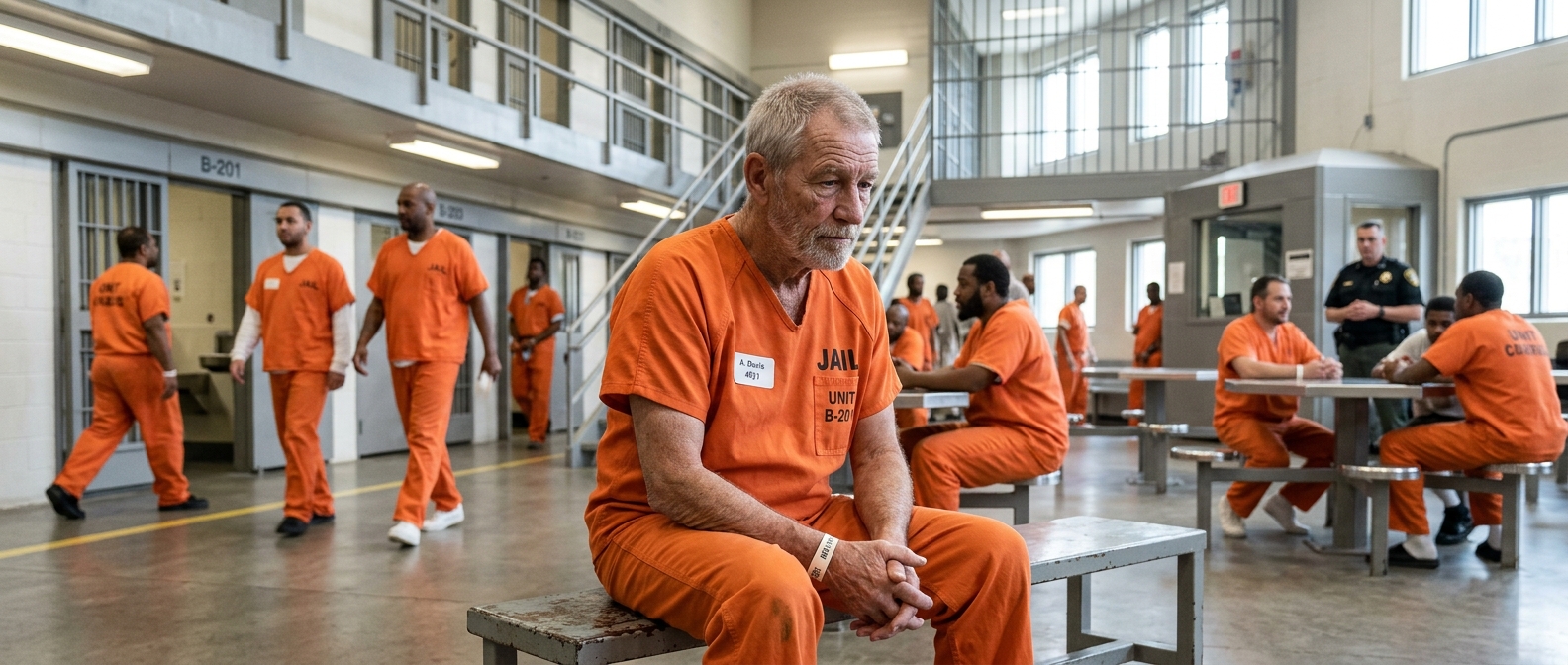
America’s prisons are getting older, fast. And that’s forcing states into an uncomfortable question: What do you do with aging inmates who are too old to be dangerous but too controversial to set free?
Research consistently shows that people tend to stop committing crimes as they age. Meanwhile, keeping elderly prisoners locked up is extraordinarily expensive. Yet despite the data and the dollars, many states remain deeply reluctant to let them go.
What Sparked the Latest Debate
Two cases in California recently blew the lid off this issue.
Gregory Vogelsang, 57, has spent 27 years behind bars for sexually assaulting young children. He was granted “elderly parole”, then the state parole board reversed course and decided to take another look.
Before that, David Allen Funston, 64, also convicted of child sexual abuse, was on the verge of release under the same law. Instead, he was transferred to a county jail and hit with new charges from a decades-old case. He’s pleaded not guilty.
Both cases triggered a bipartisan firestorm. Lawmakers are now pushing to:
- Raise the minimum age for elderly parole to as high as 75 for certain crimes
- Exclude people convicted of crimes against children entirely
Governor Gavin Newsom said he supports the law in general but disagreed with the parole board’s decisions in these specific cases and is open to tightening the rules.
How Did We Get Here?
California’s elderly parole law started in 2014, born out of necessity. Courts had ruled the state’s prisons were so overcrowded that conditions were unconstitutional. Something had to give.
Originally, the law applied to inmates 60 and older who had served at least 25 years. Then in 2020, during COVID-19, lawmakers quietly lowered the bar to age 50 and 20 years served.
Fifty might not sound “elderly” to most people. But here’s the thing: prison ages you faster. A growing body of research shows that incarcerated people develop the health problems of someone 10 to 15 years older than their actual age, the result of chronic stress, poor nutrition, and often inadequate medical care.
California is one of 24 states (plus Washington, D.C.) with some form of elderly parole on the books.
The Human Cost of Growing Old Behind Bars
The reality of aging in prison is brutal.
- When alarms go off in California prisons, inmates may be ordered to drop to the floor or stand still for up to an hour. For someone with arthritis or mobility issues, that’s agonizing.
- Two men recently released from Louisiana’s notorious Angola prison came home with cancer, glaucoma, and Hepatitis C, the toll of decades of stress and substandard healthcare.
“Dudes, just get old and die in there, man,” one of them told reporters.
In Louisiana, prisoners can apply for compassionate release only when a doctor certifies they have less than 60 days to live. But the paperwork often takes so long that people die in their cells before it’s processed. Lawmakers are now trying to extend that window to 120 days, backed by an unusual alliance of reform advocates, prison officials, and Catholic clergy.
In Pennsylvania, the compassionate release law covers people with less than a year to live, and has resulted in just 54 releases in 15 years. A new bill would expand eligibility to include people with severe cognitive decline, chronic illness, or serious physical impairment.
New York is considering its own elderly parole law, which would let inmates 55 and older who’ve served at least 15 years go before the parole board.
Follow the Money
Here’s where it gets really interesting. This isn’t just a moral debate, it’s a financial crisis.
Prisoners are the only people in America constitutionally guaranteed medical care. As they age, that guarantee gets very, very expensive.
Consider these numbers:
| State | Key Finding |
|---|---|
| Virginia | Just 9% of inmates accounted for 86% of all medical costs in 2024, driven largely by aging |
| Texas | A civil commitment program budgeted $1.8 million for medical care in 2025 — and actually spent $7.2 million |
That’s why a state comptroller, essentially a government accountant, is publishing reports on prison demographics. The math is staggering.
Once released, former prisoners typically qualify for Medicare or Medicaid, shifting the cost from state budgets to federal programs. From a pure dollars-and-cents perspective, releasing elderly inmates saves states a fortune.
So Why Don’t States Just Let Them Go?
One word: fear.
Even though research shows older people are statistically unlikely to reoffend, the possibility, especially with crimes involving children or sexual violence, creates enormous political resistance.
“Criminal justice is not cheap, and we’re not going to compromise the safety of our communities,” Virginia Republican State Senator Mark Obenshain said.
In Texas, that fear has created something even more extreme. The state runs a civil commitment program for people convicted of sex crimes who are deemed to have uncontrollable “mental abnormalities.” These individuals are held even after completing their sentences, and unlike regular prisoners, they’re not eligible for compassionate release.
Of the more than 700 people admitted to the Texas program since 2015, only 30 have ever been released.
“They say it’s rehabilitation. But that’s bull. It’s an opportunity to lock them up and throw away the key,” said Austin attorney Gene Anthes.
The Bottom Line
America is caught in a painful contradiction. The data says aging prisoners are unlikely to reoffend. The budget says keeping them locked up is unsustainable. But the politics say letting them out, especially those convicted of the most disturbing crimes, is a risk few elected officials are willing to take.
As the prison population continues to gray, states will have to decide: Is this about mercy, money, or public safety? The uncomfortable truth is that it’s about all three, and there are no easy answers.